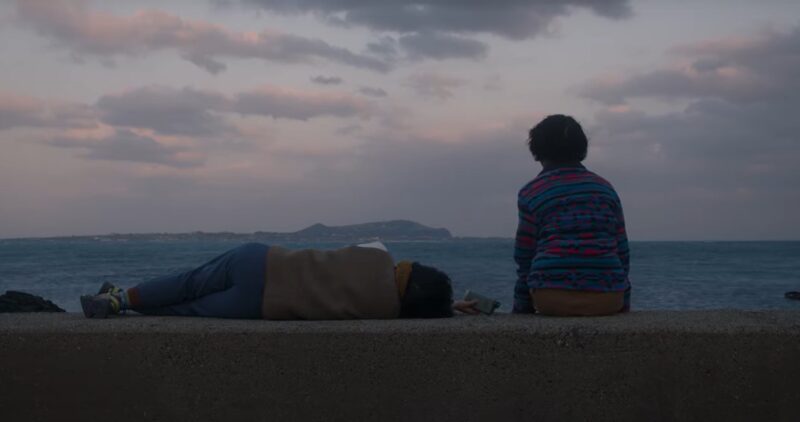
Cinema Now – Programme Note

Posted by

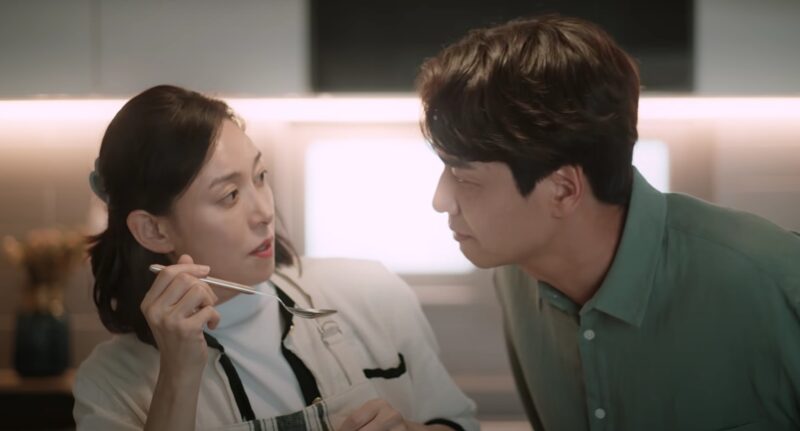
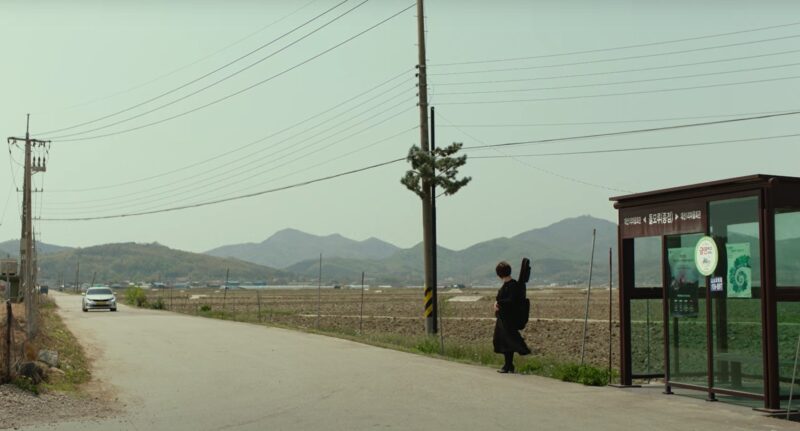
As its very name suggests, the remit of the Cinema Now strand is to focus on contemporary Korean films – but given that one of the key guiding principles for the programming (besides excellence) is eclecticism, it can be hard to generalise about films which have, after all, been selected in part for their differences and contrasts. For example, there is little common ground between Seo Yu-min’s twisty amnesiac thriller Recalled (2021) and Yu Jun-sang’s wryly deadpan journey behind the scenes of a music video Spring Song (2021), apart from the fact that both are well worth your time, and showcase the extraordinary breadth of sensibility in Korean filmmaking today.

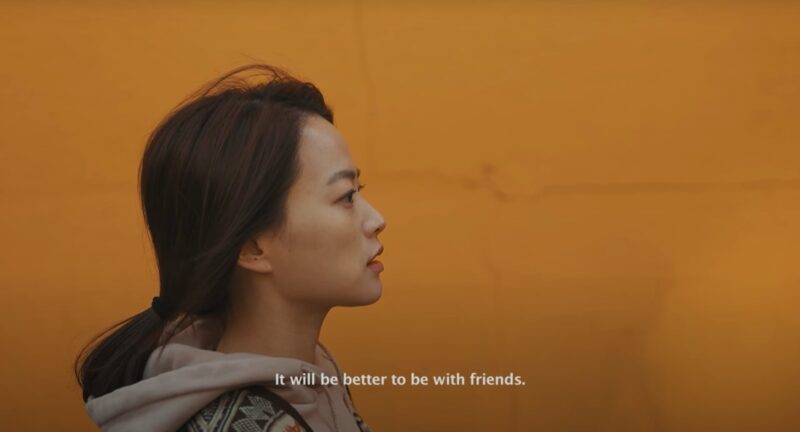
It would not be the London Korean Film Festival without the presence of the latest from Hong Sang-soo – although fans may be surprised to see his In Front Of Your Face (2021) self-consciously deviating from his usual bag of tricks (here, while heavy imbibing is certainly still done, it is not soju that is drunk). Hong Seong-eun’s feature debut Aloners (2021) surveilles all the isolation and alienation of modern urban living as a close character study and minimalist ghost story. Of course, contemporary films need not have a contemporary setting, and The Book Of Fish (2021), Lee Joon-ik’s fictionalised account of real-life scholar Chung Yak-jeon’s island exile unfolds in the early nineteenth century, even if its ideas, ideals and ideologies look forward to modern Korea – while Park Jung-bae’s rip-roaring archaeological heist adventure Collectors (2020) disinters the shifting values of Korea’s past from the vantage of the present.

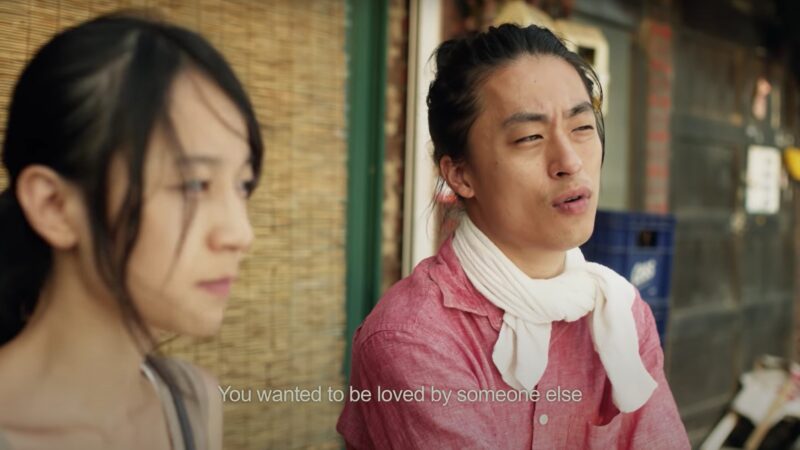
Last but not least, there is not one, but two new features (Josée, 2020; Shades of the Heart, 2021) from writer/director Kim Jong-kwan. He has been a very accomplished and prolific maker of short films since 2000, and much of his feature work has taken the form of an omnibus (Lovers, 2008; Come, Closer, 2010; Vestige, 2020), or else has intertwined multiple episodes into a more complex narrative (Worst Woman and The Table, both 2016). Arguably Shades of the Heart does something similar, presenting four autumnal encounters had by author Chang-seok (Yeon Woo-jin) as four formally headed, seemingly self-contained short films, each deriving its title from the name of Chang-seok’s current interlocutor. Yet binding these stories together is Chang-seok himself, and the fifth, final chapter reshifts attention to the author, crystallising the deep melancholy that has run through all these different meetings, and ensuring that Shades of the Heart is much more than the mere sum of its parts.

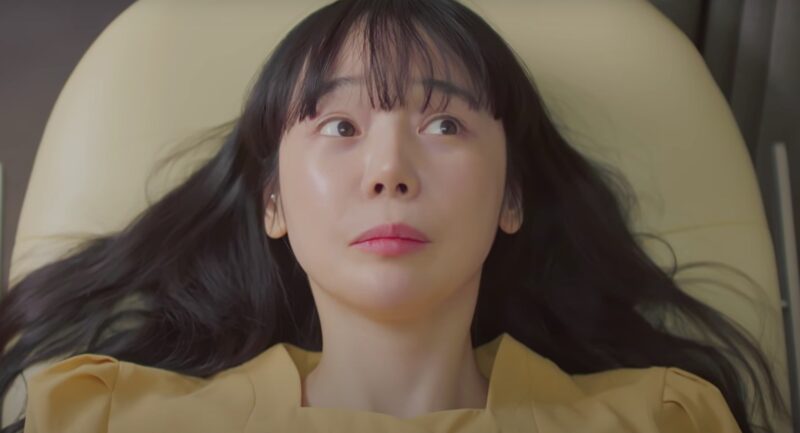
Meanwhile Kim Jong-kwa’s Josée tracks meetings between a young male student (Nam Joo Hyuk) and a wheelchair-bound, shut-in woman (Han Ji Min) whose love of tall tales and true starts to permeate the very form of her own romance (improbably blossoming in mid-winter). So if, like me, you have been unfamiliar with Kim’s work, prepare to discover, in this sly, subtle teller of human stories, your new favourite Korean filmmaker.

Anton Bitel

Posted in General | Comments Off on Cinema Now – Programme Note

London Korean Film Festival 2021: Full Programme Announcement

Posted by

After a mostly digital edition in 2020 the London Korean Film Festival (LKFF) is pleased to be returning to cinema screens across the UK’s capital for its 16th year, running from 4 – 19 November 2021. With the biggest programme dedicated to Korean cinema outside of the country itself, the festival is proud to present a rich and diverse line-up showcasing the year’s biggest box-office hits, independent cinema, women’s voices, animation, documentary, award winning shorts, plus a Special Focus celebrating the career of iconic actor and 2021 Academy Award winner Youn Yuh-jung.

 This year’s LKFF will begin on 4 November with an exciting Opening Gala from action cinema maestro Ryoo Seung-wan (The City of Violence, 2006; Veteran, 2015), one of Korea’s biggest directors of blockbuster smash-hits, the UK Premiere of action-packed true-life political drama, Escape from Mogadishu (2021). Set in the capital of Somalia during the country’s 1991 Civil War, the film centres on the staff of the South Korean embassy who become trapped as war rages on the streets around them. Stranded and under fire, the group are approached by their counterparts from the North Korean embassy. Opting for an unlikely team-up, they make an audacious plan to reach the airport and escape the country. The film stars Kim Yoon-suk (The Chaser, 2008), Zo In-sung (The King, 2017) and Huh Joon-ho (The Merciless, 2017) and skyrocketed up the charts on its Korean release this year, surpassing 3 million admissions within a month to become the highest grossing film of 2021. The festival’s Closing Gala on 19 November will be the UK Premiere of Im Sang-soo’s Heaven: To the Land of Happiness (2020). Invited to screen at Cannes in 2020 and set to open Busan International Film Festival in October, this screening offers an early look at the latest work from an internationally renowned director to a London audience. Starring Choi Min-sik (Oldboy, 2003; I Saw the Devil, 2010) and Park Hae-il (The Host, 2006; Memories of Murder, 2003) and featuring the festival’s Special Focus star Youn Yuh-jung in her fourth collaboration with director Im, the film is a warm-hearted road trip that follows two men, one an escaped convict, who get their hands on a large sum of money and take to the road dreaming of how they can use the cash to better their lives. A knockabout crime caper on its surface, with captivating action set-pieces involving both the cops and the gangsters that are hot on the heels of the mismatched pair, the film reveals itself to be a thought-provoking meditation on life and happiness as it takes us on a journey down its twisting roads.

Following the historic Academy Award wins of Bong Joon-ho’s Parasite (2019), the depth of talent within Korea’s screen industry has continued to be highlighted on the international stage this year. Not only has Netflix’s recent TV phenomenon Squid Game (2021) taken the ‘#1 show’ spot in over 90 countries around the globe, but further awards success arrived earlier this year when veteran actor Youn Yuh-jung picked up Best Supporting Actress Awards at both the Oscars and the BAFTAs for her role in Minari (Lee Isaac Chung, 2020). With these momentous award wins and her incredible performance still fresh in the minds of UK film fans, not to mention her unforgettable acceptance speeches, the LKFF is inviting audiences to take a deep-dive into the back-catalogue of this extraordinary actor with the strand Special Focus: Youn Yuh-Jung. This programme will draw from across Youn’s career with retrospective screenings to present a comprehensive look at one of Korea’s most celebrated performers. 

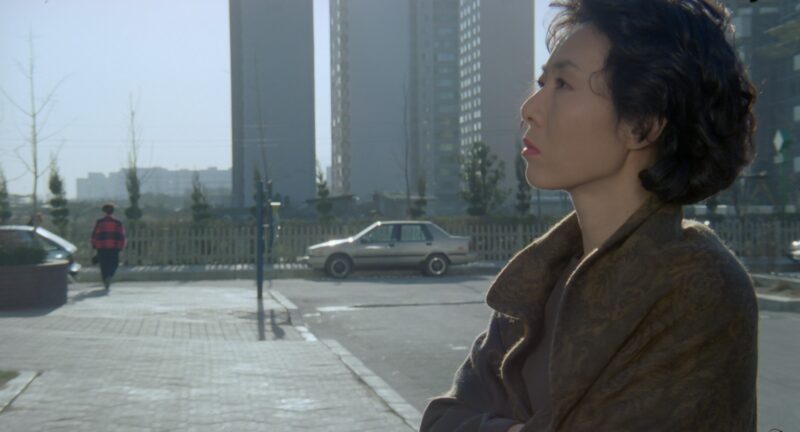
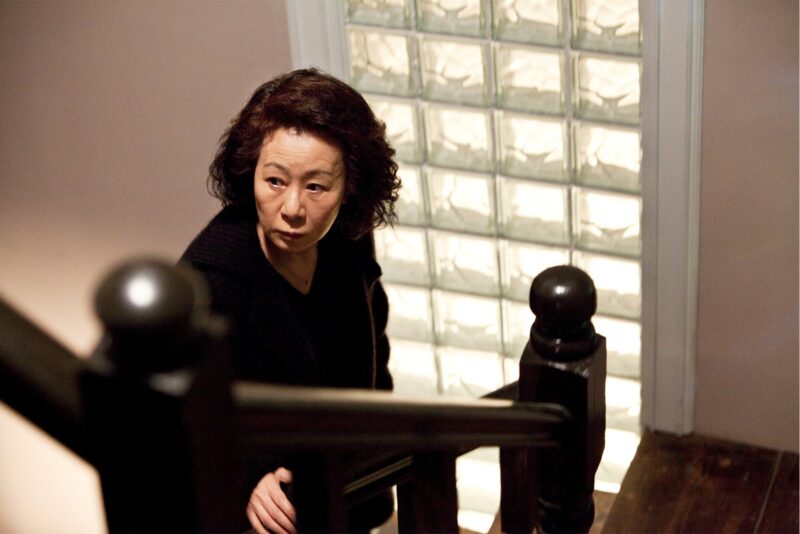
Headlining the strand is a newly restored classic from the inimitable auteur Kim Ki-young. The “genius” director who was thanked during Youn’s Oscars acceptance speech proved instrumental in her career by giving the young actor her first screen role, and trusting her as the lead, in Woman of Fire (1970), presented here as a European Premiere of a brand new digital restoration. Appearing on the big screen for the first time in 50-years and infused with idiosyncratic filmmaker Kim Ki-young’s typically audacious use of colour, this intense thriller provided a bold introduction to a dynamic new screen presence in Youn Yuh-jung. Playing a housemaid who sets about dismantling a family’s fragile respectability by targeting her married boss, this audacious film is a remake of the director’s 1960 masterpiece, The Housemaid. Youn’s collaborations with acclaimed director Im Sang-soo will also be highlighted. The Housemaid (2010), nominated for the Palme d’Or at Cannes, is Im Sang-soo’s own interpretation of Kim Ki-young’s classic, a sleek and sexy thriller and a scathing attack on the upper class. This time Youn takes the role of an elder live-in maid of a billionaire family. After employing a young woman, played by star Jeon Do-youn (Secret Sunshine, 2007), as an au pair, a tragic chain of events ensues when she is seduced by the husband of the family (Lee Jung-jae, Squid Game, 2021). A Good Lawyer’s Wife (2003), which earned director Im a nomination for Venice’s prestigious Golden Lion, sees Youn playing a woman who finds sexual fulfilment outside of her marriage to a dying alcoholic, while her son (Hwang Jung-min, The Wailing, 2016) and daughter-in-law (Moon So-ri, Oasis, 2002) also seek satisfaction through marital transgressions. Heart-wrenching melodrama Canola (2016) finds Youn playing grandmother Hong Gyechoon who lives on rural Jeju island, working with the other local women as a diver and taking care of her beloved granddaughter Hyeji. After the little girl disappears, Grandma Hong is left heartbroken until one day many years later a troubled teen from the city is discovered, claiming to be the lost child. But not all is as it seems… In director E J-yong’s 2016 festival favourite The Bacchus Lady (2016) Youn takes the lead as an elderly sex-worker who struggles to care for the troubled souls around her while nursing her own tragic past, while the International Premiere of  “Documentary Youn Yuh-Jung” (2021) has collaborators and colleagues past and present pay tribute to the star in the wake of her incredible Academy Award win.

Cinema Now offers audiences the chance to discover a diverse selection of contemporary titles from the past 12-months. This eclectic strand presents films across a range of styles and genres, from stylish cinema hits to powerful new works by boundary-pushing filmmakers. First up, the LKFF’s annual presentation of the latest fresh-from-Cannes work of much-loved auteur Hong Sangsoo, In Front of Your Face (UK Premiere, 2020) sees the director reunited with actor Kwon Haehyo and his The Day After (2017) co-star Cho Yunhee. Teasing new depths out of a familiar scenario and cast, Hong’s film tells the story of an actress looking to refresh her career after a lengthy stay abroad and her meeting with a movie director looking to cast her in his next film. Aloners (UK Premiere, 2021), the directorial debut of Hong Sung-eun, claimed the Grand Prize at Jeonju International Film Festival 2021 and earned further acclaim at Toronto and San Sebastian International Film Festival 2021. With a sensitive and absorbing central performance from Gong Seung-yeon, the film peels back the layers of angst and loneliness of a young woman who has actively shut herself off from the world, including those closest to her. The Book of Fish (UK Premiere, 2021) is the latest sweeping, sumptuous epic from the modern specialist of the historical drama, Lee Joon-ik (The Throne, 2015 Dongju: The Portrait of a Poet, 2016), and stars Sul Kyung-gu (Oasis, 2002; Peppermint Candy, 1999) as a scholar exiled to an island, who trades his knowledge in Confucianism with a fisherman in order to write an epic book about the sea. Two titles highlight the work of director Kim Jong-kwan; Shades of the Heart (European Premiere, 2021) follows an author, back in Korea after separating from a wife in England, as he reflects on some of life’s bitter truths via interactions with friends and colleagues across four interconnected chapters, while Josée (UK Premiere, 2020) based on Japanese short story Josee, the Tiger and the Fish, traces the romance which blossoms between a young student and the mysterious title character (Han Ji-min, The Age of Shadows, 2016) who tells fanciful, improbable stories about her life. In bitter-sweet comedy-drama Spring Song (European Premiere, 2021) director and star Yu Jun-sang (also a real-life member of the band featured in the film, ‘J and Joy 20’) plays a singer who heads off to Japan with his guitarist to make a music video with nothing more than the tune to the song in their heads, director Park Jung-bae’s box-office hit Collectors (UK Premiere, 2020) is a crime adventure in which a crooked team of treasure hunters including a gentleman thief (Lee Je Hoon, The Phantom Detective, 2016) and an unethical archaeologist (Jo Woo Jin, The Drug King, 2018) attempt to steal an ancient artifact from the heart of Gangnam, Seoul. Recalled (UK Premiere, 2021) from director Seo You-min (The Last Princess, 2016) is a dark and mysterious thriller in which a woman suffers a head injury that leaves her with clairvoyant powers and  no memory of her husband. 

Shining a light on significant works to have risen out of the independent film sector, Indie Talent is a showcase for fresh new voices and up-and-coming filmmakers making their mark. Co-directors Lee Seunghwan and Yoo Jaewook mine their own experiences as teenage rappers in the semi-autobiographical Limecrime (UK Premiere, 2020) which takes viewers on a journey into Korea’s hip-hop scene as two wannabe rap stars try to find their voice. LGBTQ+ romantic comedy Made on the Rooftop (UK Premiere, 2020) from director Kimjho Gwang-soo charts the relationship dramas of two men: Haneul who is forced to move out after pushing his previous boyfriend too far, and video influencer Bongsik who’s online confidence masks his deeper social insecurities. Director Kwak Min-seung’s Covid era-set realist film Rolling (UK Premiere, 2021) observes the minutiae of everyday pandemic life when a young woman is forced to take over her mother’s kimbap shop after a family tragedy. Lastly Awoke (International Premiere, 2020) is an eye-opening and confrontational insight into society’s treatment of the disabled, charting the bureaucratic nightmare of a man in dire need of government support, who is forced to prove his level of disability when deemed fit to work. Produced and directed by a crew made up of both able-bodied and disabled members, the film reflects their real-life experiences as well as that of the broader disabled community, following significant outreach work on the part of the production team. 

While new works by women filmmakers are presented across the LKFF programme, this representation is focused in the Women’s Voices strand which is programmed in collaboration with the Seoul International Woman’s Film Festival and presents two powerful features from filmmakers creating their own space within Korea’s indie film landscape. Receiving its International Premiere, After Me Too (2021) is a documentary which looks at the impact of the #MeToo movement on Korean society via a series of short films from a quartet of women directors, Park Sohyun, Lee Somyi, Kangyu Garam and Soram, who explore the lives and voices of women activists and filmmakers with a focus on how patriarchy and structural sexism is being tackled today. After making a name for herself  with a series of highly-regarded shorts, director Lee Woo-jung makes her feature debut with Snowball (UK Premiere, 2021) which screened at Busan and won the Rising Star Award at the New York Asian Film Festival. The film looks at the complex and changing relationships within a trio of 18-year-old girls who, tired of feeling like they don’t belong, build up the courage to run away from home.

The Documentary strand presents two works, chosen by programmers from Birkbeck Institute for the Moving Image’s Essay Film Festival, which focus on labour issues and uprisings, highlighting wider Korean history, social change and activism through the turmoil experienced by their subjects. Sister J (UK Premiere, 2020) is the name director Lee Soojung affectionately gives to middle-aged factory worker, Lim Jaechun. Unexpectedly fired from his job of 30-years, Lim now creates activism through art as he sings, writes and performs to raise awareness of his plight in a prolonged fight for justice. Director Lee Hyukrae and Kim Jungyoung’s moving documentary Sewing Sisters (International Premiere, 2020) reunites a group of women who went from their countryside homes to live and work at the sewing factories of Seoul under appalling, exploitative conditions while still in their young teenage years. Finding their voices and becoming politicised, these girls formed unions and held protests but were met with fierce, violent opposition by both the industry and government. 

 Representing the Animation strand is director Kim Hye-mi’s dark body-horror Climbing (UK Premiere, 2021), an incredible 3D animated work that incorporates a woman’s pregnancy fears into a twisted fever dream. The film centres on a professional climber, Choi, who is on the verge of competing in the World Championship when she discovers she is pregnant. Grappling with the news, the climber begins to receive horrifying text messages from a parallel version of herself living an alternate life.

With the upcoming celebration of their 20th anniversary, Mise-en-Scène Shorts strand programmers from the Mise-en-Scène Short Film Festival have put together a very special set of titles representing some of the best short films and most significant directors to have emerged from the festival over the past two decades. From director Lee Kyoung-mi, whose debut feature Missing opened the LKFF in 2016, Feel Good Story (2004) is an award-winning work about an aspiring writer working a stifling office job; The Perfect Fishplate (2005) from The Wailing (2016) director Na Hong-jin finds a chef sacrificing his own body in his quest to create the ultimate culinary experience; director of the award winning Han Gong-ju (2013), Lee Su-jin places a protestor and a policeman alone together in an alley during a violent stand-off in Enemy’s Apple (2007); Um Tae-hwa’s Forest (2012) finds two boys with contrasting personalities vie for the affection of a girl over the course of a picnic; How to Operate a Polaroid Camera (2004) a short from Kim Jong-kwan, whose features Josée and Shades of the Heart are also being shown at this year’s festival, finds a young women struggling to express her feelings through the lens of the precious polaroid camera which belongs to her crush; The Cursed (2010) from Huh Jung, director of horror hit The Mimic (2017), concerns a girl who believes she is cursed and is losing her grip on reality while her brother tries to pull her back from the brink; Jo Sung-hee’s Don’t Step Out of the House (2009) also finds a brother caring for his sister after their father abandons them with a warning not to leave the basement, but what will they do about food, who are the strange men outside, and why is the parrot spouting obscenities? Lastly, Kang Jin-a brings us back to the real world in Be With Me (2009) as a man struggles over his feelings for the friend he’s fallen in love with.

Presented in partnership with LUX, the UK agency supporting artists’ moving image, the Artist Video strand this year focuses on the work of Korean artist Ellie Kyungran Heo with her first UK solo exhibition Plantarians (2017-2020) presented at LUX (6 November – 11 December). Since graduating from the Royal College of Art in London in 2015 Ellie Kyungran Heo has exhibited in London, Sao Paulo and Seoul and her gentle, elusive and nuanced work considers the ethics of coexistence through careful and intentional framing of the everyday. Plantarians was first screened at LUX in 2017 and this new iteration will feature a collection of short films alongside photography and video installations, accompanied by a commissioned essay and public programmes. 

The London Korean Film Festival 2021 takes place from 4 November – 19 November

London venues: Picturehouse Central, Regent Street Cinema, ICA, Bertha Dochouse, Institut Francais, Screen on the Green, Genesis Cinema, The Cinema in The Arches, KCCUK 

For any press requests please contact festival publicist Christopher O’Keeffe: chris@witchfinder.co (+44 7413 157 011)

About London Korean Film Festival:

 The London Korean Film Festival will return to celebrate its 16th year from 4 November – 19 November 2021, featuring 35+ cinema screenings in leading venues around London.

The London Korean Film Festival has grown from humble beginnings to become one of the longest running and most respected festivals dedicated to Korean cinema in the world. We’ve built a name upon presenting lineups consisting of everything from the country’s most successful blockbusters to thought-provoking independents from its finest auteurs. Across a variety of finely curated strands we aim to cater for general audiences to committed cinephiles, and everyone in between.

The 16th London Korean Film Festival is organised by the Korean Cultural Centre UK with the support of the Korean Ministry of Culture, Sports & Tourism, Korean Film Council.

 More about the KCCUK:

Since being opened by the Korean Ministry of Culture, Sports and Tourism in January 2008, under the jurisdiction of the Embassy of the Republic of Korea, the KCCUK has gone from strength to strength in its role of enhancing friendship, amity and understanding between Korea and the UK through cultural and educational activities.

As well as presenting a diverse range of ongoing monthly events focused on Korean film, drama, education and literature, the KCCUK regularly welcomes Korean luminaries from many cultural fields to discuss their work, organises the annual film festival as well as traditional and contemporary musical performances and holds a number of exhibitions throughout the year, allowing artists to showcase their talent. From the KCCUK’s central London location (just off Trafalgar Square), the institution’s dedicated cultural team work to further develop established cultural projects, introduce new opportunities to expand Korean programmes in the UK and to encourage ongoing cultural exchange.
Posted in General | Comments Off on London Korean Film Festival 2021: Full Programme Announcement

Youn Yuh-jung: An Actor for All Seasons

Posted by

The American Academy of  Motion Picture Arts and Sciences added the categories of best supporting actors, male and female, to the Oscar awards in 1937. That was only the ninth ceremony in a total of ninety three so far. One of the several thousand gold-plated statuettes presented since the event began was awarded to the much-loved South Korean actor Youn Yuh-jung (also romanised Yun Yeo-jeong) at the last Oscar ceremony in April 2021. It was in recognition of her powerful and deeply humorous supporting role as halmoni/ grandma Sunja in Lee Issac Chung’s remarkable film Minari (if Korean film Parasite had not already won the Oscar for Best Film the preceding year, Korean-American Minari might have earned that statuette as well despite the overwhelming popularity of winner Nomadland). Youn not only won that Best Supporting Actress Oscar but the Screen Actors’ Guild and BAFTA versions as well, among many other accolades. In Korea the reaction was overwhelming.

It is easy to find Youn Yuh Jung’s acceptance speech online. * Listen to her short, irrepressibly funny thank-yous– who else would use the occasion to tease a Brad Pitt – and you’ll catch the name Kim Ki-young. He was the unconventional director – ‘an awkward genius,’ Youn has called him —  who gave Youn her first film part in 1970. She was in fact given the starring role: Myungja, a not-at-all-naïve young woman who comes from the countryside to wreak havoc in a city household, an odd mix of chicken farm and bourgeois pretensions. Youn had only been acting for a few years at the time. A part-time job at TV station TBC turned into an acting vocation when she won an in-house talent competition. By 1971 TBC had handed her the lead in the first television version of the tale of Chang Hui-bin, the most famous femme fatale of the old Choseon Dynasty. Kim Ki-young had, like the television producers, recognised her unconventional modern beauty and seductive energy. Youn swept the best-actress awards in Korea that year. Kim repeated the success of Woman of Fire the following year with Youn returning as Myungja in the even stranger, more fantastic Insect Woman. So it is no surprise that twenty years later, his career in decline, Kim tried to capitalise on her magic once again in what became his final film, Angel, Become an Evil Woman (1990).

The decades in between had been difficult for Youn. She had married a popular singer and he had taken her off to the US. She ended up with two young sons and a divorce. Back in Korea she picked up her career in TV drama but now the roles were not major ones. No one would give a lead role to a divorced woman. In conservative, patriarchal Korean society, divorce casts a much longer shadow over women than men.

Then director Im Sang-soo cast Youn in a relatively minor supporting role in his 2003 film The Good Lawyer’s Wife. And her come-back had begun. Youn more than held her own against emerging stars Moon So-ri and Hwang Jung-min in her role as Hwang’s sexually active mother, a woman determined not to be a dreary widow. In what now seems a pleasant prediction of future honours, Youn won the Busan Critics award for best-supporting actress that year. Im has cast her in other films since, but her most intriguing role was that of ‘Miss Cho’ in his 2010 remake and revisioning of Kim Ki-young’s most famous film, The Housemaid (1960). In Korea, all the best-supporting actress awards went to her in 2010.

In the space of a short retrospective it is pretty hard to suggest more than an outline of Youn Yuh-jung’s cinematic career. We have selected three films from 2016 to give some idea of the range of her acting skills across a single year: from the humour of Ladies of the Forest, to the mix of humour and tragedy in melodrama Canola and the haunting realism of The Bacchus Lady. We will soon be able to see Youn Yuh-jung in the epic TV series Pachinko. It is difficult to see anyone else in the role of matriarch Sunja: a soul-sister of Minari’s Sunja,  an embodiment of the complicated, tragic, contrary, fascinating seasons of modern Korean history.

*  For example https://www.youtube.com/watch?v=ifGIAQz9rtk

Mark Morris

London Korean Film Festival 2021: Artwork Announced

Posted by

This year’s LKFF artwork draws upon the global significance of Korean cinema with bold neon colours, standing out against a black background. As in 2020, the circular theme represents the gaze of a camera lens, focused on the LKFF logo in the centre. The theme of ‘journey’ is explored here through the circular lines tracing around the edge of the frame. Youn Yuh-jung’s incredible acting journey started in 1970 with Kim Ki-young’s Woman of Fire. Since then she has encompassed the most iconic Korean directors and landmark films. Her surname (여정, Yuh-jung) also translates as ‘journey’ in Korean.

Our bold new style reflects the recent success of Korean film, which was once again highlighted on the national stage this year when Youn picked up Best Supporting Actress Awards at both the Oscars and the BAFTAs for her role in Minari (Lee Isaac Chung, 2020). 

Stay tuned for more announcements on our lineup and venues. Looking forward to seeing you again in November!

Artwork by Everyday-practice.

Posted in General | Comments Off on London Korean Film Festival 2021: Artwork Announced

Korean Film Nights: In Transit

Posted by

In a special collaboration with Bertha DocHouse, KCCUK and Birkbeck University present a journey into contemporary Korean documentary. Korean Film Nights: In Transit addresses the continuously transforming public and private spaces of marginalised communities, which take on new meanings through different cultural viewpoints. These 4 carefully selected titles offer a meditation on spatial politics, exploring how they intersect with various personal narratives. Our programme will take place both at the Bertha DocHouse cinema and online, reflecting the current transient nature of cinema spaces.

There is a long-standing Korean documentary tradition of films about social and political change, with breakthrough works including The Sanggyedong Olympics (1988) and The Murmuring (1995). This tradition is rooted in activism, the labour movement and the amplification of underrepresented voices. It forms the historical context of our selection. In Transit showcases how four contemporary documentary filmmakers have positioned themselves within that history, both in dialogue and also offering new approaches to their craft.

Our programme explores different ways of understanding space and movement. It looks at how we negotiate our existence within spaces and how our experience is also expanded by them. The global experience of being confined into one’s house serves as a metaphor for personal spatial containment, but also reveals the socio-political structure of containment. Our four films offer an alternative way to transcend these states of confinement.

Weekends

In Transit opens with Weekends, a story about G-Voice, the first gay choir in Korea. As the group fight for their space to perform on stage, both literally and metaphorically, director Lee Dong-ha shines a spotlight on what happens when the collective helps repressed communities.

Book for Weekends, a Bertha Dochouse online screening, on Thursday July 29, 7pm

The Sea of Itami Jun

Jung Da-woon’s The Sea of Itami Jun treats space in perhaps the most literal way. However, there is more to this than meets the eye. Never quite finding his place in the world, Itami Jun designs his spaces to utilise the surrounding environment. Nothing is static in his work, not even his architecture is immune to the passage of time.

Book for The Sea of Itami Jun at Bertha Dochouse cinema, on Sunday 1st August, 6pm

Sound of Nomad

The theme of the diasporic Korean community is explored in Kim So-young’s Sound of Nomad. A filmic journey that starts in 1937, the film focuses on the Koryo people, displaced from East Russia to Kazakhstan. It looks at how the community creates their own space so far from home by embracing the richness of their culture. By taking care of each other and celebrating their roots, the community creates their own space of belonging and identity.

Book for Sound of Nomad + Rec. Q&A, a Bertha Dochouse online screening, on Thursday 5th August, 7pm

Time to Read Poems

The act of finding one’s home is depicted in Lee Soojung’s Time To Read Poems. What connects the five main characters is a drive to create their own safe spaces: mentally, physically, economically and socially. With the sensibility of a poet, the director gives them a way to express their vulnerabilities.

Book for Time To Read Poems at Bertha Dochouse cinema, on Tuesday 10th August, 6.30pm

In Transit gives space to the unrepresented, voice to people and stories often left silent or at the social and political margins. The selected films are predominantly directed by women and focus on the Korean diaspora, the working class and sexual minorities. By showcasing these films, we highlight the importance of community and the people with whom we share our lives and spaces. All these stories look back as a means to imagine a more connected and inclusive future.

They explore the importance of memory for who we are but also who we want to be. These documentaries show us the courage and resilience of the people in stories of displacement, those who take an active role in transforming their social and political realities. We experience a journey through the creation of collectively inhabited interior and exterior spaces, where identity is transferred and rediscovered. In this current moment of continuing uncertainty, of being in transit, these stories remind us of the potential we have for transformation.

Posted in General | Comments Off on Korean Film Nights: In Transit

Filming Against the Odds: Five Films, Four Women Directors from Korea

Posted by

Our new series of Korean Film Night screenings is devoted to the work of four of the small number of women film-makers who managed to create feature films between the middle and end of the last century: from Park Nam-ok’s pioneering The Widow from 1955 to Lee Seo-gun’s offbeat fantasy Rub Love of 1998. On its way, the series offers a much-belated UK premier for two films by Choi Eun-hee from the 1960s.

The Korean Cultural Centre in London and its annual London Korean Film Festival has often highlighted the work of women film-makers past and present. ‘Women’s Voices’ has become a vital section of LKFF programmes. The 2016 LKFF Special Focus on women directors introduced work from Park’s The Widow to films by Lee Kyoung-mi (Crush and Blush 2008, The Truth Beneath 2016), a director whose recent 2020 Netflix series The School Nurse Files is still intriguing and mystifying viewers worldwide. Jeon Go-woon’s haunting Microhabitat (2017) occupied the opening gala spot in 2018, in recognition of the power of independent film-making by contemporary young directors.

This century has seen a wider participation by women in the entire film industry than would have been possible only decades ago. University film and television departments have flourished, the Korean Academy of Film Arts (since 1984) and Korea National University of Arts/K-Arts (since 1993) have produced graduates well-trained in film theory and practice. They have made it increasingly possible for talented, determined young women to take at least the first steps towards a career. For example, someone like Lee Kyoung-mi, with a first degree in Russian, could follow her truer passion and enroll as a student at K-Arts. (Even so, in her particular case, it seems to have been the friendly support of Park Chan-wook as producer on Crush and Blush which helped convert a gifted maker of indie short films into a significant new director.)

In earlier times the route to any film career was fairly narrow. To even dream of becoming a director generally meant beginning at the bottom, with the hope of apprenticing yourself as assistant director to an established film-maker. You had to learn on the job in a thoroughly commercial, almost exclusively male business, one which did not encourage experimentation on the artistic or personnel front.

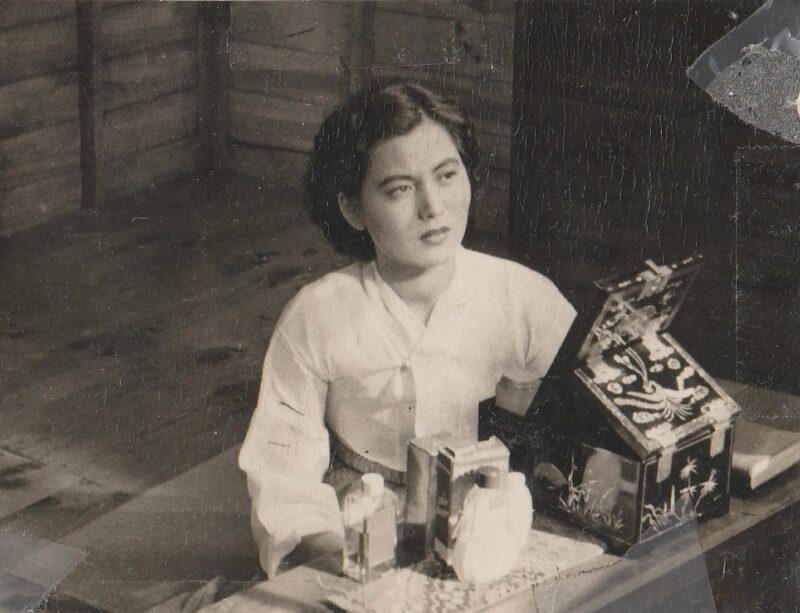
When Park Nam-ok set out to shoot The Widow in the summer of 1954, South Korea was still lifting itself out of the ruins of the Korean War. Park, a huge film fan in her teens,  had written film reviews and tried to enter the film world in the late 1940s. She could only make it as far as the role of ‘scripter’ (a.k.a. ‘continuity girl’) for what happened to be Choi Eun-hee’s debut film in 1947. She joined a Ministry of Defense film unit during the war, where she gained crucial experience and made useful friendships. To create this first Korean film by a woman director, Park Nam-ok put together some money from her sister and obtained the help of a film-veteran and former neighbour, Jeon Chang-keun, who served as producer – he was her version of a Park Chan-wook. She cast the lovely rising star Lee Min-ja as her Shinja. Despite all that, the film was not a success nor did Park find a way to continue her career.

There is a much reproduced photo of her taken during the shoot, looking care-worn, her baby girl on her back. Film scholars have written about the sacrifices Park made to get the film completed, with apparently no help in caring for that little girl. In later life, she herself preferred a different, unsentimental photo: at a 1962 film festival in Tokyo, Park stands, in formal hanbok, next to top Korean star Kim Jin-kyu as Japanese superstar Mifune Toshiro leans over to light her cigarette.

Park Nam-ok’s The Widow deftly resists the pull of melodrama. A conventional approach might have protagonist Shinja wracked by guilt over neglecting her daughter and/or sleeping with a new man, the daughter could come down with some horrible disease and Shinja be forced to give herself to her patron, etc., etc. At least one critic has even suggested that Park’s lack of sentimentality was simply due to her lack of experience in proper (melo?) film-making. The Widow still seems a worthy forerunner to the women’s films which would follow.

During the 1960s film production soared. From some 100 features made in 1959, close to 200 would become the average. Despite the need for more directors, only two women had the chance to step behind the camera for significant productions. Hong Eun-won began as scripter, then fully-fledged scriptwriter before shooting her first film A Woman Judge in 1962. The film screened in the Special Focus section of LKFF 2019. Hong only made two more films, neither of which survive, before returning to scriptwriting. Something like a pattern was emerging in which women might be given three chances to direct, but producers were reluctant to let them develop a real career. Certainly the odds were never good.

Choi Eun-hee was already one of the biggest stars of the fifties and sixties before she made the first of her three films, Daughter-In-Law, in 1965. Her husband, Shin Sang-ok, already a major film director and producer, was just about to establish Korea’s largest studio, Shin Films. It may be hard to judge what degree of creativity Choi herself brought to the rather conventional and melodramatic story; the script was based on a popular radio series. While even her acting skills may not persuade us that Jeomsun really is a twenty-something, the relationship which develops between Choi/Jeomsun and the little master conveys a real sense of warmth and affection. The film was a success.

A Princess’ One Sided Love (1968), from two years later, is a lively costume drama set the middle of the Joseon era. It is refreshingly free of sentimentality and high-seriousness. Shin Films had the resources to produce a number of sagŭk historical dramas, but few achieve the humour of Choi’s. If only it had been shot in colour! Audiences nowadays can still appreciate how comically outrageous princess Suk-gyeong’s behaviour is: chasing a man — lower-status at that, defying her mother, insulting her grandfather, prowling the capital dressed as a man. As part of the film’s promotion, a special pre-release screening was held for a women-only audience. Maybe just a gimmick, but it  would be nice to know what the reaction had been.

Hwang Hye-mi was the lone woman director of commercial films active in the 1970s. She entered the film industry, as it were, from the top. Hwang had helped to produce films by the veteran Kim Soo-yong and her friend, writer-turned director Kim Seung-ok, before directing three films herself between 1970-72. First Experience (1970), a romantic melodrama, was well received by critics and the public. Yet no print survives of it nor of her two other melodramas.

Lee Mi-rye was only 28-years old when she made My Daughter Rescued from the Swamp in 1984. (We’d probably say, ‘saved from the gutter’). She had taken a familiar route: from scripter, when still a student, to a veteran director (Yu Hyun-mok ), then assistant director to another (Kim Ho-sun), to helming her first feature. The film was a hit, especially with younger audiences, ranking fifth most popular for the year. Her former mentor Kim Ho-sun paid her a left-handed compliment when in 1986, apparently trying to cash in on her success, he turned out a My Daughter Rescued from the Swamp 2. It flopped. People still recall fondly her second film Young-Shim (1990). Based on a popular manhwa (comics and print cartoons), it pulled out all the stops to appeal to youth culture, music and dance included. Lee went on to make four more films, the final one the disappointing This is the Beginning of Love (1990). Producers wanted her to stick to ‘high teen’ material, films pitched at teenagers and university students. Lee chose to leave the business.

Already, at the age of twenty, Lee Seo-gun had gathered praise for her short film The Suicide Party (1995); by twenty-one she had scripted the controversial film 301, 302 (1995) for established director Park Chul-soo. It is well worth mentioning that one of the two co-stars of the film, Pang Eun-jin, would go on to become a successful director the following decade. And she’s made more than three films.

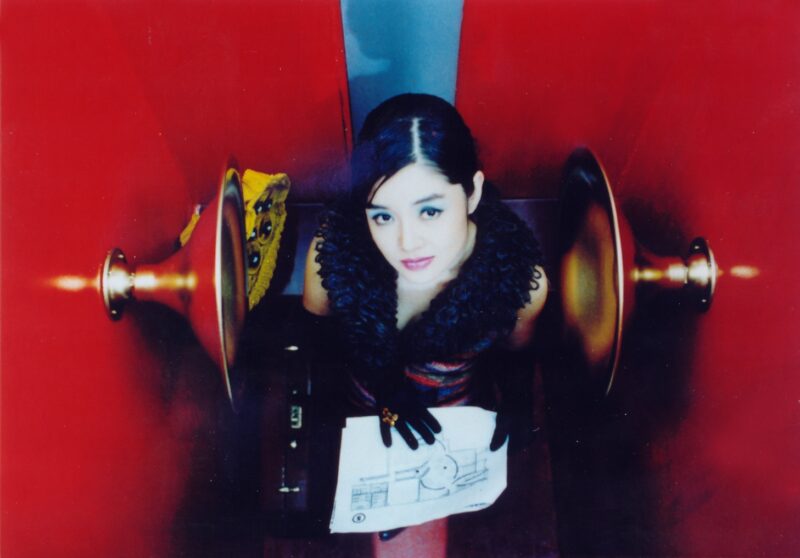
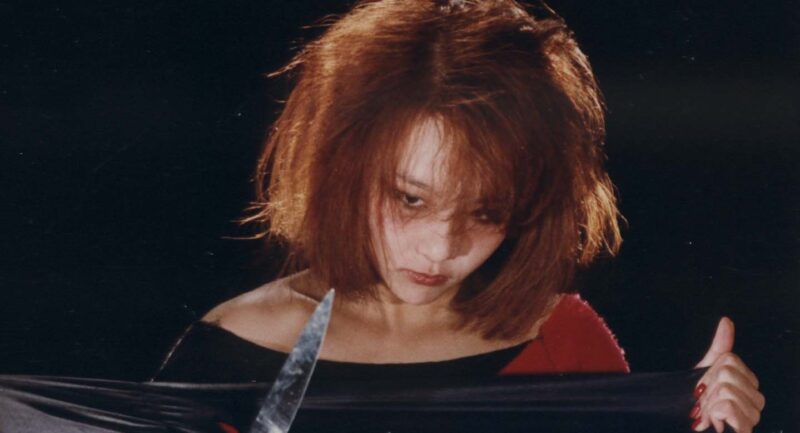
The tide of melodrama which Park Nam-ok seemed to resist, and which women directors of the sixties and seventies generally drifted along with, had very little purchase on Lee Mi-rye and none, it seemed, on Lee Seo-gun. Her exploration of fantasy and dark emotions in Suicide Party led onto the black, queasy humour of 301, 302. It pairs as neighbours a food-fetish chef, 301, with a victim of sexual abuse suffering from anorexia, 302. We might guess that after that, Lee’s Rub Love (1998) was intended as an exercise in lightness, even silliness, kept aloft more or less by visual experimentation and the beauty of female lead Lee Ji-eun, then at the peak of a short career. The film appeared at a time when for a number of reasons, such as competition from TV and Hollywood, audiences for Korean-made films were meager, nothing like the crowds who would support the revivified cinema of this century. Lee would have to wait until 2009 to make her next film. The Recipe is a nostalgic evocation of food, memory and lost love: Lee played it safe this time and let a bit of melo in by the front door.

So much for the past. We can look forward to the autumn and to seeing what new women film-makers the next edition of the London Korean Film Festival – the 16th —  will be introducing to both me and to you.

Our KFN series Filming Against the Odds: Five Films, Four Women Directors from Korea starts on 14 May with Daughter-In-Law. Films will be hosted on the KCCUK YouTube channel and released every two weeks.

The last film in our season, Lee Seo-gun’s groundbreaking 1998 sci-fi drama Rub Love, is available here.

The Widow will be available throughout the season on the Korean Film Archive’s YouTube channel here.

*Filming Against The Odds is programmed in collaboration with the Korean Film Archive and curator Mark Morris

*Mark Morris is a fellow of Trinity College, Cambridge. For the past 40 years he has been teaching and researching East Asian culture, with a special interest in Korean Cinema. He is an advisor to the London Korean Film Festival and participates regularly in a wide variety of film events in the UK, Europe and South Korea.

Posted in General | Comments Off on Filming Against the Odds: Five Films, Four Women Directors from Korea

Lee Byung Yoon (BEFF) and the ‘Yuwol Universe’ short films

Posted by

Lee Byung Yoon was born in Seoul, was raised in the United States, and returned to Korea to study film directing at the Korea National University of Arts. There he discovered a love for dance, and, between commercial shoots and dance classes, made the 25-minute short Yuwol: The Boy Who Made the World Dance in 2018 under his working name BEFF.

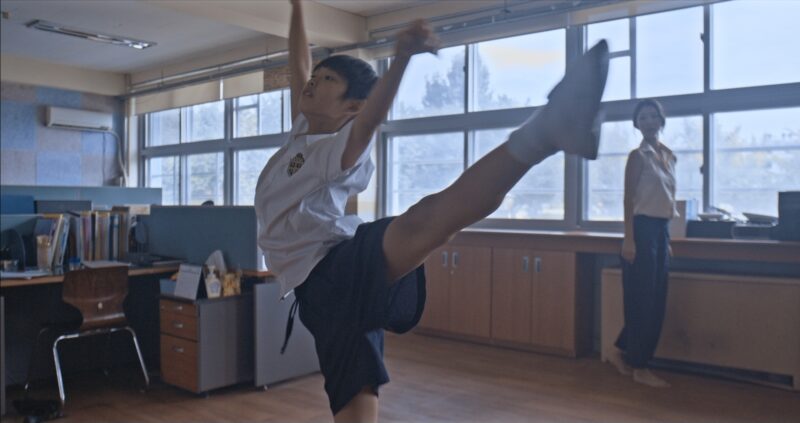
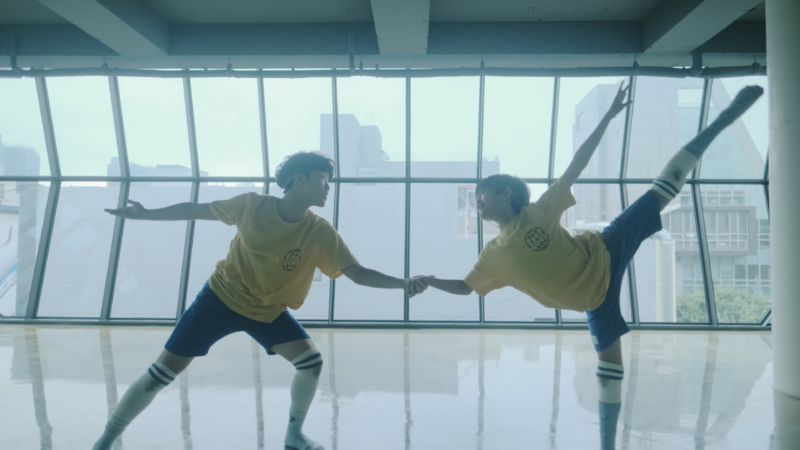
At the heart of this short is a phenomenon akin to tarantism, a medieval dancing mania associated with the Italian province of Taranto and the bite of the tarantula. Here, though, the setting is a contemporary school and its surroundings in a Korean city, where dreamy young misfit pupil Min Yuwol (Sim Hyeon-seo) wakes up in class with an irresistible rhythm luring first his eyes, and then his whole body, into motion. As his strict teacher Miss Hye-lim (Choi Min) imposes discipline on the class, Yuwol finds himself at the centre of an outbreak of compulsive twitchings and zombie-like convulsions among his peers which he, through the exuberant force of his presence, choreographs into dance around him. Recognising Yuwol as patient zero in this rapidly spreading infection of resistance, Hye-lim and the other teachers pursue the boy, only to succumb to the craze one by one, and to abandon themselves to the subversive, addictive rhythm. It may all be just a dream of rebellious freedom, but Yuwol’s sense of wayward joy proves irrepressible, even in reality.

This is a spectacular extravaganza, taking Yuwol through a wide range of routines and locations, from pop in the school corridors, to tap in a Youtube studio kitchen (with BEFF himself playing a dancing director), to an intimate pas à deux in the school’s staff room, to a Grease-style outdoors ensemble number in the playground. Its message, articulated by Yuwol as “Who cares? Let it out”, is an ecstatic plea against the forces of repression, even as, with a certain irony, the beat of the music imposes an order of its own, if different from the prevailing conformity.

Made two years later, BEFF’s 10-minute follow-up short I Wanna Dance With Somebody sees Yuwol (now played by Kim Jong-woo) as a grown-up, headband-wearing ‘loser’ in college. Amid a rash of mysterious infections that have kept the teachers from class, Yuwol gets the dance bug again, but fails to finds a partner in this university environment, and so, alone in a gym, he dances solo to the strains of Whitney Houston singing “I wanna dance with somebody… who loves me” around a mirror, until his younger self (Sim Hyeon-seo) emerges and joins the lonely student in an enthusiastic duet.

It is a peculiar fantasy, showing an adult still very much in step with the rhythms of his inner child, while also capturing a moment of narcissistic longing and self-love as dance. The credits declare it part of the ‘Yuwol Universe’, leaving us wondering where BEFF and ‘Team Yuwol’ will take this chorophile character next.

Register to attend our Lee Byung Yoon on Yuwol KFN online talk.


Anton Bitel is a part-time Classicist and freelance film critic, contributing regularly to (among others) Sight & Sound, Little White Lies and VODzilla.co. He is a programmer for the London Korean Film Festival.

Posted in General | Comments Off on Lee Byung Yoon (BEFF) and the ‘Yuwol Universe’ short films

Doc Alliance and Jeonju Film Festival

Posted by

At the end of 2020, DAFilms launched a new platform in Asia. Given the platform’s origins in the 7-festival Doc Alliance as well as its recurring collaborations with European and North and South American festivals in general, it seemed only natural that this new Asian iteration would forge a similar path in new regions. And of all the festivals in South East Asia, few can claim to be quite as essential to both Asian and world cinema as Jeonju IFF. DAFilms is happy to announce that its first festival collaboration on the Asian continent is with Korean’s most important film festival, bringing a crop of films hand-picked by festival programmers to Asian and world audiences via DAFilms. This first focus on Korean film via Jeonju is a significant step in the direction of bringing locally-curated Asian and Korean films to international viewers, something LKFF has itself been engaged in since the start of its mission. This particular selection combines many different kinds of works, spanning history, politics, dance, art, UFOs, and domestic drama, giving a flavour of the sheer breadth of Korean film and television today, as well as hinting at the future of festival collaborations at DAFilms, which will cover a similarly broad sweep.

Doc Alliance is the result of a creative partnership of 7 key European documentary film festivals.The aim of the Doc Alliance initiative is to advance the documentary genre, support its diversity and continuously promote quality creative documentary films.

Posted in General | Comments Off on Doc Alliance and Jeonju Film Festival

Yi Ok-seop and Koo Kyo-hwan: Three short films

Posted by

Part of our Spring KFN season celebrating short film innovators.

Yi Ok-seop is the writer/director of a number of short films (starting with her 2010 debut Please Find My Mum), and of the feature Maggie (2018), which screened at the BFI London Film Festival. Koo Kyo-hwan is an actor who in 2013 debuted as writer/director on the shorts Where Is My DVD? and Welcome To My Home – in which he also starred. In 2014, Koo would take a lead role in Yi’s short A Dangerous Woman, and so began a long and fertile creative collaboration which lasts to this day. Koo has headlined as an actor in nearly all Yi’s subsequent work, as well as co-writing and co- directing her shorts Love Docu (2015), Fly To The Sky (2015) and Girls On Top (2017), and co- writing Maggie. Much of their work is collected on a shared YouTube channel, from which we have selected three of their short films that come with good English subtitles.

You can watch all of the below films on Yi Ok-seop & Koo Kyo-hwan’s YouTube channel here. When viewing use the CC button for English subtitles.

Where Is My DVD

They say ‘Write what you know’, and in Koo’s directorial debut Where Is My DVD? there would appear to be an obvious element of the autobiographical, even if that is constantly subverted by a strong streak of the absurd. Here the quest of actor Gi-hwan (Koo) to retrieve disk copies of all his previous films is at once a nostalgic trip down memory lane, a methodical confrontation with past colleagues and formative experiences, a wry metacinematic odyssey through the ambitions, pretensions and disappointments of Korea’s indie filmmaking scene, and a preparation for his latest role. Along the way, there is a recurring fixation with oral hygiene – and it all culminates in a coda (presented as a DVD’s ‘special feature’) in which the (semi-)fictive Gi-hwan receives unwitting encouragement from none other than Korea’s most successful writer/director, Bong Joon-ho.

Watch Where Is My DVD? here

A Dangerous Woman

Yi’s A Dangerous Woman is a love triangle. Fine arts student Bo-kyung (Kim Kkot Bi) has been going out for four years with Duk-woo (Koo), but while their relationship is comfortable, she feels it has long since lost its heat and become suffocating (a metaphor that in one sequence will become literalised) – so she has strayed to fellow artist Soo Jang (Baek Soo Jang), and now finds herself caught between them, leaving her life as dysfunctional as the second-hand fan that she has recently acquired. It is a funny, breezy portrait of a compromised woman, plus a cabbie who rejects his assigned part as an incidental character, and some very smart intermixing of diegetic and non-diegetic music to underscore Bo- kyung’s heartbreak.

Watch A Dangerous Woman here

Girls On Top

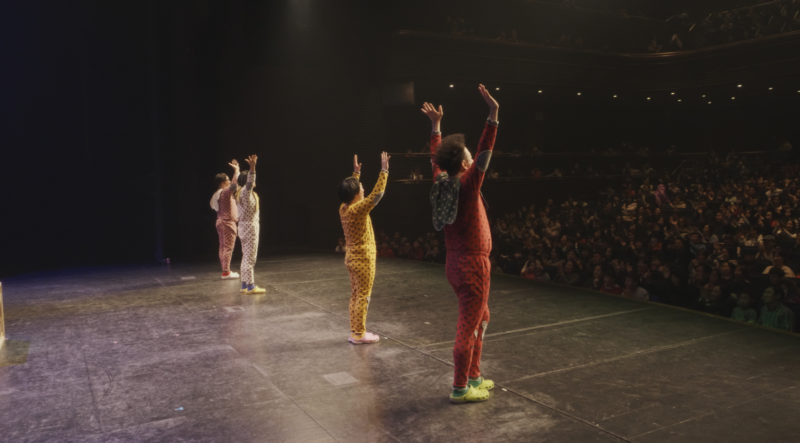
The much shorter, much more surreal Girls On Top concerns a circus performer (Lee Joo-young) who has recently quit aerial acrobatics for unicycling, her friend (Chun Woo-hee) who has had to abandon a beloved cactus that has outgrown her apartment, and the gravity-defying solidarity that these two women show each other as they face change together.

Watch Girls On Top here


Anton Bitel is a part-time Classicist and freelance film critic, contributing regularly to (among others) Sight & Sound, Little White Lies and VODzilla.co. He is a programmer for the London Korean Film Festival.

Posted in General | Comments Off on Yi Ok-seop and Koo Kyo-hwan: Three short films

Korean Film Nights: Short Film Innovators

Posted by

For our Spring edition of Korean Film Nights, we present short films from two innovative YouTube channels. In the era of Coronavirus we have witnessed the film industry shifting online, and these offerings showcase the rising stars who have continued to draw audiences of thousands to view their imaginative, dramatic and artistic works.

Our first selection is from YouTube channel Salon De 0.5 F (Underground Salon). We will shortly be hosting an online event with talented directors Kim Soy and Kim Kkobbi, stay tuned for details on what promises to be an insightful talk. When viewing our short film selections on YouTube use the CC button for English subtitles.

And So Again Today: Four short films from the Underground Salon

And So Again Today is the collective title for a compilation of four Korean short films, all directed by actors, and all posted on the YouTube channel Salon De 0.5 F (Underground Salon) in 2020. In a sense those are the only formal connections between the films but, perhaps in reflection of the filmmakers’ ages, they are also linked thematically by a preoccupation with the surrender to (or retreat from) adulthood.

My wife has gained weight, Ryu Deok-hwan

In Ryu Deok-hwan’s My wife has gained weight, after a husband (Kim Tae-hun) carefully observes his wife (Jang Young-nam) after she expresses anxiety over how much weight she is putting on, he diagnoses her ‘problem’ as being mostly the effects of maternal devotion and finds a way to share the burden of both her dutiful eating and her new exercise regime. It is a tender portrait of a couple attentive to their family’s needs, and together accepting, even embracing, the changes that come with parenthood and middle age.

Watch My Wife Has Gained Weight here

My Eggs, Kim Soy

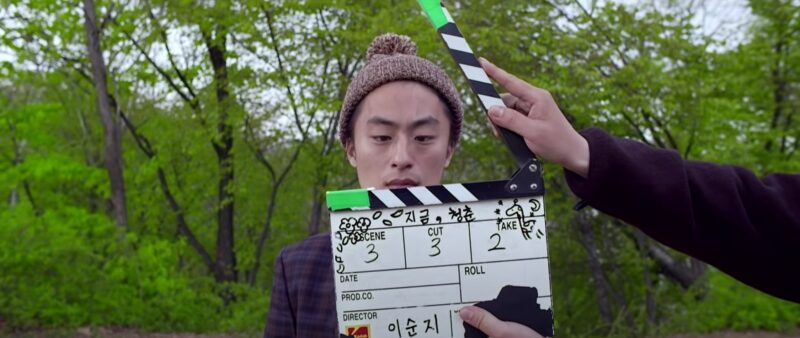
Kim Soy’s My Eggs begins with its filmmaking protagonist Sujin (played by the director herself) being reminded how close her screenplays are to her life, and then follows her reluctant journey, at the insistence of her mother (Ahn Min-yeong), to get her ova frozen, even though she does not want children of her own. It is a playful tale of an eccentric woman made aware that her biological clock is ticking, and struggling to live her own life despite the expectations of others. Sujin’s confidante is her own egg (voiced by Lee Min-ji), which talks to her from within her ovary – but Sujin’s real children are indie films just like My Eggs, even as it is strongly implied that this script too is autobiographical.

Watch My Eggs here

Season of the Next Steps, Heo Joon-seok

There ought to be little in common between Ryoo Seung-wan’s ultraviolent action film The City of Violence (2006) and Heo Joon-seok’s gentle short Season of the Next Steps, but in fact both begin with a premise lifted straight out of Lawrence Kasdan’s The Big Chill (1983): old friends reunite in adulthood after one of them has died. In Heo’s film, disgruntled office worker Kuk-hee (Kim Kuk-hee) returns from the city to her former country town for a funeral. There she learns that, unlike herself, her old bandmates Sa-bong (Yoon Sa-bong) and Jae-yoon (Yoon Je-yoon) have clung to their rebellious countercultural ways, and that perhaps she too could do with rediscovering the spirit of her lost childhood.

Watch Season Of The Next Steps here

Do you like camping?, Kim Kkobbi

My personal favourite of the four is Kim Kkobbi’s Do you like camping? (aka Aimez-vous camping), in which a motorcyclist (played by Kim), camping by the windy sea, spurns a hipsterish male fellow camper’s attentions while herself fixating on a female camper (Yozoh) who is more her speed. As everyone vies to have – and to be seen having – an authentic camping experience, posturing pretensions are exposed to the elements. Wryly observed, and never quite going where expected, this is an off- season, off-kilter delight, subverting everything including its own gestures towards romance.

Watch Do You Like Camping? here


Anton Bitel is a part-time Classicist and freelance film critic, contributing regularly to (among others) Sight & Sound, Little White Lies and VODzilla.co. He is a programmer for the London Korean Film Festival.

Posted in General | Comments Off on Korean Film Nights: Short Film Innovators